
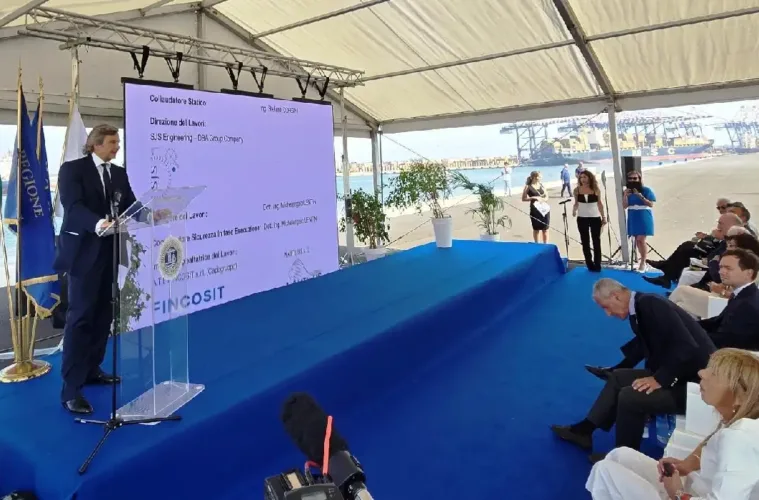
In the field of maritime infrastructure design, the evolution of port structures reflects a progressive refinement of technical solutions and a growing focus on the interaction between engineering, environment, and urban context. Within this framework operates Fincosit, a historic Italian company specialized in maritime and port construction, active for over a century in the development of complex infrastructure along national and European coastlines.
The operational continuity developed over time has enabled the company to address projects characterized by high engineering complexity, where design plays a central role in balancing functionality with territorial integration.
Breakwaters, in particular, represent one of the most significant areas of modern port design, not only for their primary function of protecting harbor basins, but also for their contribution to the overall configuration of port spaces. The evolution of construction techniques has led to solutions capable of responding to increasingly complex requirements, including navigation safety, traffic management, and infrastructure resilience to environmental conditions. In this context, design is no longer limited to structural definition, but extends to evaluating the broader impact on port layout and surrounding territorial dynamics.
Projects such as the new Genoa breakwater highlight the complexity of these processes. The construction of infrastructure on this scale requires coordination across multiple technical disciplines, from geotechnical analysis to maritime engineering, as well as logistical planning and execution management. The objective goes beyond improving port operations, encompassing the need to adapt infrastructure to evolving maritime traffic patterns and the increasing size of vessels.
According to Alessandro Mazzi, a technical reference figure within Fincosit, “the design of port infrastructure today requires an integrated approach, capable of combining technical, organizational, and territorial aspects.” This perspective reflects the need to develop design solutions that engage with the context in which they are implemented, taking into account both operational requirements and their implications for urban and economic systems.
Experiences developed in other contexts, such as interventions in the ports of Bari and Barletta, further confirm this approach. In these cases, the projects have contributed to redefining port accessibility and improving safety conditions, working within established port configurations while introducing functional upgrades. Design, therefore, becomes a central element in balancing the continuity of existing structures with the need to adapt to new demands within the logistics system.
In the current landscape, maritime infrastructure design is increasingly positioned within a framework where technical considerations intersect with territorial dynamics. Alessandro Mazzi: “Port structures are not merely functional elements for managing traffic flows, but also play a role in shaping coastal spaces and the relationship between cities and their ports.” In this sense, the experience developed by Fincosit demonstrates how the quality of design can significantly influence the ability of infrastructure to integrate with its context and effectively respond to ongoing transformations in the maritime sector.
