
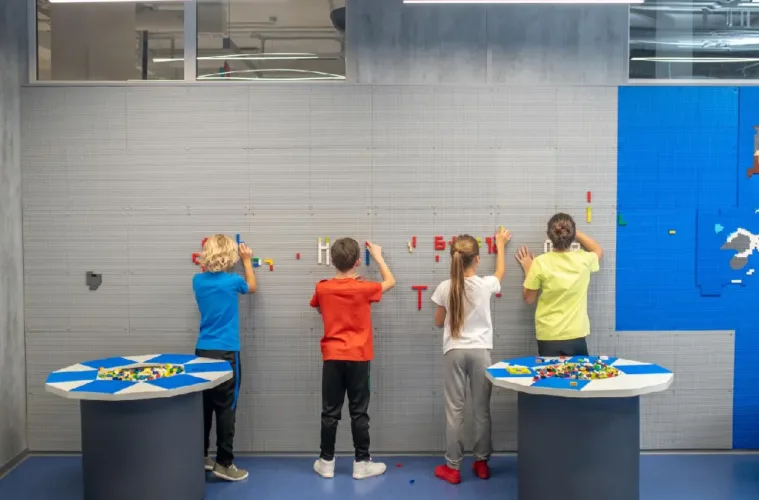
To attract visitors who increasingly seek hands-on activities, museum administrators should offer active experiences. Indoor playgrounds provide a solution. These are safe, climate-controlled spaces that combine physical activity with education and social development. They provide a holistic experience that can foster lifelong learning.
The Benefits of Indoor Playgrounds
To maintain or increase family attendance, especially when competing with other leisure activities, museum administrators should include play in their mission. Indoor playgrounds can:
- Attract family audiences: A safe play space can encourage families to stay longer and return for repeat visits.
- Unlock revenue opportunities: Indoor playgrounds might include dedicated play zones with admission fees or rentable party spaces.
- Deepen thematic connections: A playground’s design can reinforce the museum’s core exhibits, immersing children in the topics they learn about.
Encourage physical activity: Soft obstacles, climbing structures and other equipment are great ways for children to release energy and build strength.
Creating an Indoor Playground for Your Museum
From initial design consultations to launch day, you must carefully consider every element of the play space.
1. Space and Footprint
An indoor playground must be thoughtfully placed inside the museum. They are typically located near an entrance for easy access or centrally located to let children expend energy between exhibits. You can also place small-scale interactive zones within larger exhibit spaces.
The indoor playground should feature distinct areas for different age groups, such as soft, padded play for toddlers versus a climbing structure for older children. Modular elements encourage multifunctional setups.
Along with immersive spaces or equipment, a museum’s indoor playground should include comfortable seating for caregivers and be in proximity to restrooms or drinking fountains. Add cubbies for them to store belongings, a stroller parking area and hand sanitizer stations.
2. Accessibility and Safety
ADA-compliant design is crucial in creating a safe and inclusive space so children of all abilities can participate. You should also be mindful of surfaces that may be too tall for young children or wheelchair users to comfortably access.
The American Society for Testing and Materials (ASTM) and Consumer Product Safety Commission (CPSC) also provide guidelines for playground safety. The ASTM addresses material quality, structural integrity, equipment spacing and more standards, while the CPSC recommends inspections, age-appropriate design, proper surfaces and more risk-mitigation strategies.
3. Theming and Branding
Indoor playgrounds for museums should blend seamlessly with the institution’s mission and branding. This includes intentionally incorporating marketing colors and key imagery into the imaginative space and its signage.
Well-executed themed environments can attract children to the play space and reinforce your brand identity. Here are several examples of indoor playground themes for museums:
- A transit exhibit may feature a play area designed to look like a plane, train or boat, enabling children to role-play in these environments.
- A natural history museum may include a prehistoric indoor playground and sandbox for children to dig for “fossils.”
- An aquarium’s indoor playground may include a slide painted to look like a waterfall, hanging fish sculptures and a sensory water table.
- A STEM museum may benefit from engineering stations with building blocks or gears, programmable robots, and ball machines.
4. Budgeting and Return on Investment
When budgeting for indoor playgrounds for museums, administrators must consider the initial capital expense for professional equipment, which may be prefabricated or custom. It must comply with safety standards and be built to last.
Site considerations factor into the budget. You may need to add rubber flooring, wall padding and other CPSC-compliant features to reduce the risk of injury. The space should be climate-controlled for year-round access.
Maintaining your indoor playground can maximize its benefits. Ongoing operation expenses include routine cleaning, safety inspections, utilities and staff compensation. You may also need general liability insurance. A dependable playground provider can assist you every step of the way.
Choosing the Best Playground Partner
Soft Play provides innovative play solutions in a wide range of sizes for commercial spaces, driving business while engaging young imaginations. Engineered and assembled in the U.S., the equipment is durable and simple to maintain, leading to years of imagination and educational value.
Since 1984, Soft Play has established a strong portfolio of creating themed indoor playgrounds, including structures and elements for the Denver International Airport, the Kennedy Space Center, the Children’s Museum of Atlanta and more.
By partnering with Soft Play, museum administrators can receive:
- Industry-leading play solutions that exceed accessibility and safety standards.
- Work completed by certified installation partners, providing technical expertise and peace of mind.
- Standard or custom components and themes to match a museum’s vision and goals.
Frequently Asked Questions
Learn more about indoor playgrounds for museums as you develop play-based learning opportunities.
What should a museum’s indoor playground include?
The playground should include interactive, durable and thematic elements. Common components are climbing structures, sensory panels and role-play areas. Consider separate play zones for children of all ages and abilities.
How much do indoor playgrounds for museums cost?
The cost of indoor playgrounds varies, starting lower for smaller, simpler configurations and increasing with size, complexity and customization. Choosing equipment and toys with safety and accessibility features is a worthwhile investment.
What are the best museums with indoor playgrounds?
Some of the most highly rated museums with indoor playgrounds in the United States include the Children’s Museum in Indianapolis, Indiana, the California Science Center in Los Angeles, California, and the Museum of Science and Industry in Chicago, Illinois. Museum administrators can take inspiration from other institutions with well-regarded play spaces.
Making Museums More Playful
An indoor playground is a strategic investment in a museum’s future. It offers hands-on immersion and encourages repeat visits. The playground should be inclusive of all visitors and easy to maintain, providing years of enjoyment. By partnering with trusted providers like Soft Play, museum administration can embrace play as a core component of the modern learning experience.

