
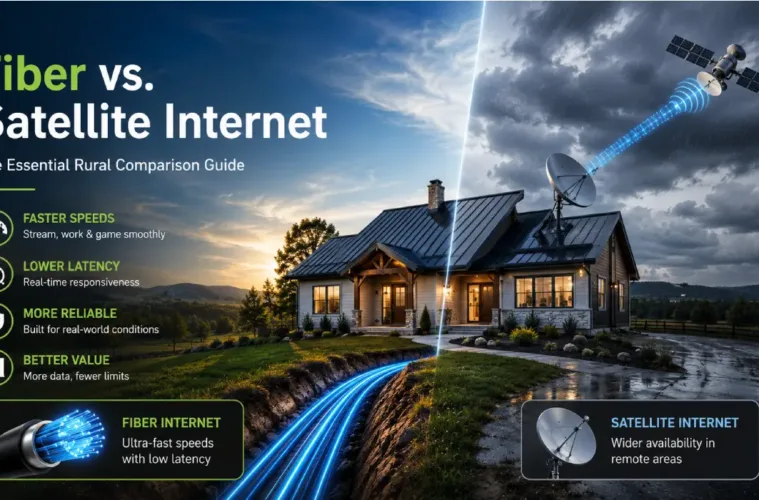
Rural residents face a unique challenge when choosing an internet service provider. Most urban areas have multiple high-speed options, but rural internet typically includes two main choices. Fiber-optic internet and satellite can both deliver connectivity to remote properties, but they perform very differently in real-world use. Understanding their differences helps you select the service that best fits your needs.
Why Choosing the Right Internet Matters for Rural Life
Internet access is as essential as electricity for rural households and farms. Stable connections enable remote work, online education and video calls. Managing a farm operation also means monitoring equipment, tracking weather patterns and handling business finances online.
When your connection slows or drops out, you miss meetings and delay orders. Many households have also turned to streaming services for entertainment, making reliable internet even more important. Every aspect of daily life now depends on the service you sign up for.
How Fiber and Satellite Perform for Regular Use
Modern rural life demands internet performance that supports work, education and entertainment simultaneously. The two main technologies available deliver very different experiences in these everyday scenarios.
Getting Faster Speeds for Streaming and Browsing
Fiber-optic technology transmits data as pulses of light through thin glass cables, enabling extremely high download speeds. Satellite internet sends signals to a dish on your property, which communicates with an orbiting satellite. Because that signal must travel through space and back, speeds can drop significantly. When several users stream 4K video and download large files at once, fiber handles the load without slowdowns. Satellite connections might struggle under the same conditions.
Reducing Frustrating Lag and Buffering
Most satellite services in rural areas use geostationary satellites orbiting roughly 22,000 miles above Earth. Signals must travel that distance up and back for every action you take online. This distance creates noticeable delays that show up as frozen video during calls or stuttering gameplay.
Fiber cables avoid that travel by connecting your home and the network. The result is a near-instantaneous response that makes calls feel natural and web pages load immediately.
Improving Video Calls and File Uploads
Fiber internet typically offers symmetrical upload performance, meaning a 500 megabits-per-second connection delivers the same rate whether you’re downloading or uploading. This balance makes a huge difference for video calls and tasks like emailing large files or uploading inventory data. Satellite connections deliver significantly slower upload speeds, which can be frustrating.
Which Service Is More Reliable Day to Day?
Connection stability largely depends on the physical infrastructure. Buried or pole-mounted fiber-optic cables remain protected from most environmental factors and the direct physical connection eliminates many variables that could disrupt service.
Meanwhile, satellite dishes sit exposed on rooftops or poles. This works well under clear skies but leaves the connection vulnerable to weather-related interruptions.
Weather and Availability Factors
Fiber vs. satellite internet performance tells only part of the story. Rural users must also consider whether they can actually access fiber service, how weather affects their connection and what the data limits may be.
Which Service Can You Get at Your Address?
Availability is the biggest hurdle for most rural residents. Recent data shows that approximately 8 million rural Americans still lack access to fixed broadband at speeds of 25/3 megabits per second or higher. Although the government is working to close this gap, fiber buildout takes time. Check whether fiber providers serve your specific address before comparing other factors.
Understanding Data Limits
Satellite plans often include data allowances that range from 50 to 150 gigabytes per month. Exceeding your limit usually results in drastically reduced speeds until the next billing period. This means that a household that streams video regularly can hit a 100-gigabyte cap in just a couple of weeks. Many fiber providers address concerns about overage fees or throttled speeds by offering unlimited data plans.
How Your Connection Holds Up in Bad Weather
Whether buried underground or mounted on utility poles, fiber-optic cables are built to resist rain, snow, wind and ice storms with minimal impact on performance.
Satellite internet requires a clear line of sight between the dish and the orbiting satellite. Heavy rain, dense snow or thick cloud cover can cause interruptions that last as long as the severe weather continues.
What to Expect from the Installation Process
Satellite installation starts with mounting a dish in an area with an unobstructed view of the sky. A technician then runs a cable from the dish to a modem inside your home.
Fiber installation requires running a durable cable from the nearest network point to your property. Look for a provider whose technicians prep your home by installing the infrastructure and hardware to support a premium connection. Highline offers this level of service and focuses specifically on serving rural communities. The white-glove approach ensures your property receives the attention it needs for a quality setup.
Comparing the True Monthly and Up-Front Costs
Satellite internet often requires purchasing or leasing equipment up front. Dish and modem costs can reach several hundred dollars before service begins, while service fees typically range from $50 to $150. Fiber service packages frequently include the necessary equipment. Rates vary by location but generally fall within a similar range.
What to Look For in a Modern Fiber Provider
Quality service companies understand the specific needs of rural properties. Local technicians make a difference because they can respond faster and understand the unique challenges of serving farms and rural homes.
Fiber internet benefits include fast speeds and low latency, but whole-home Wi-Fi solutions are essential for larger properties. Mesh Wi-Fi systems extend coverage across structures, while network security features protect your personal and business data from online threats.
Highline exemplifies these qualities by combining fiber internet benefits with services designed for rural users. The company provides whole-home Wi-Fi to cover your entire property and offers tools to manage your network through an easy-to-use app.
Frequently Asked Questions About Rural Internet
These answers address the most common concerns about daily internet use and choosing the right service for specific situations.
Which internet service is best for rural households?
Fast speeds, low latency and unlimited data all make fiber internet the best experience for rural households. This is good news for households with multiple users streaming video, attending online classes and working from home.
Should you choose fiber or satellite for remote work?
Video conferencing demands low latency for natural conversations and strong upload speeds to transmit a video feed clearly, making fiber optimal. Satellite can support basic connectivity, but video calls and large file transfers can become frustrating.
What internet option is best for a farm or large rural property?
Farms need internet service that supports both business operations and connectivity across multiple buildings. Mesh Wi-Fi and voice service options from the right provider ensure your internet reaches barns, equipment sheds, workshops and guest houses.
You Deserve the Best Connection for Your Area
Choosing between fiber and satellite depends on what’s available at your location and what your property needs most. Check fiber availability first, and if it serves your address, compare local providers based on installation quality, customer support and coverage options. Your daily routines will benefit from making an informed choice about rural internet.

